

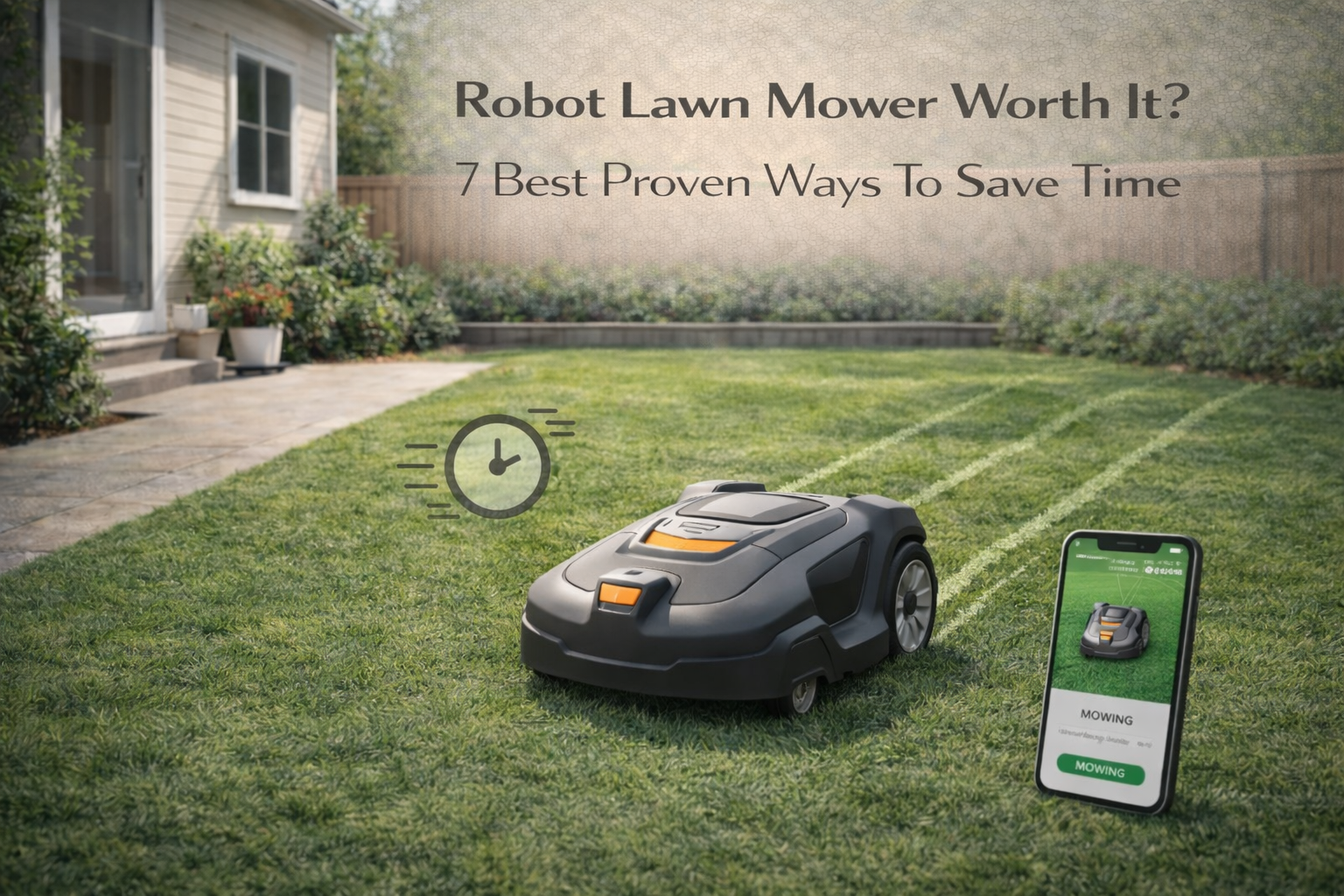
Robot lawn mower worth it is one of the hottest questions for suburban homeowners who want to cut lawn chores but are cautious about cost, installation, and real-life reliability. This buying guide is for homeowners with small or medium lawns seeking hands-off maintenance and aiming to spend smarter—not just more.
Disclosure: This post may contain affiliate links. If you buy through them, we may earn a commission at no extra cost to you.
Key Takeaways
- Robot lawn mowers deliver real convenience and time savings but only make sense for certain yard sizes, layouts, and budgets.
- Upfront costs are high—be sure to factor in replacement parts, maintenance, and installation anywhere from $800 to $2,500+ for most models.
- If your yard is under 1 acre, mostly open, and you want less manual work, a robot mower could be worth it—those with steep hills, many obstacles, or tight budgets should reconsider.
- The Core Concept
- Quick Decision Guide
- Step by Step Buying Guide
- Options and Alternatives
- Advanced Analysis and Common Pitfalls
- Conclusion
- FAQ
The Core Concept
Robot lawn mowers are autonomous, battery-powered devices designed to mow your yard automatically on a schedule, freeing you from regular manual mowing or the ongoing cost of a yard service. Most popular with suburban homeowners who want convenience, they’re rapidly gaining adoption—65% of the market is residential, fueled by demand for hands-off maintenance and frequent cuts for healthier lawns.
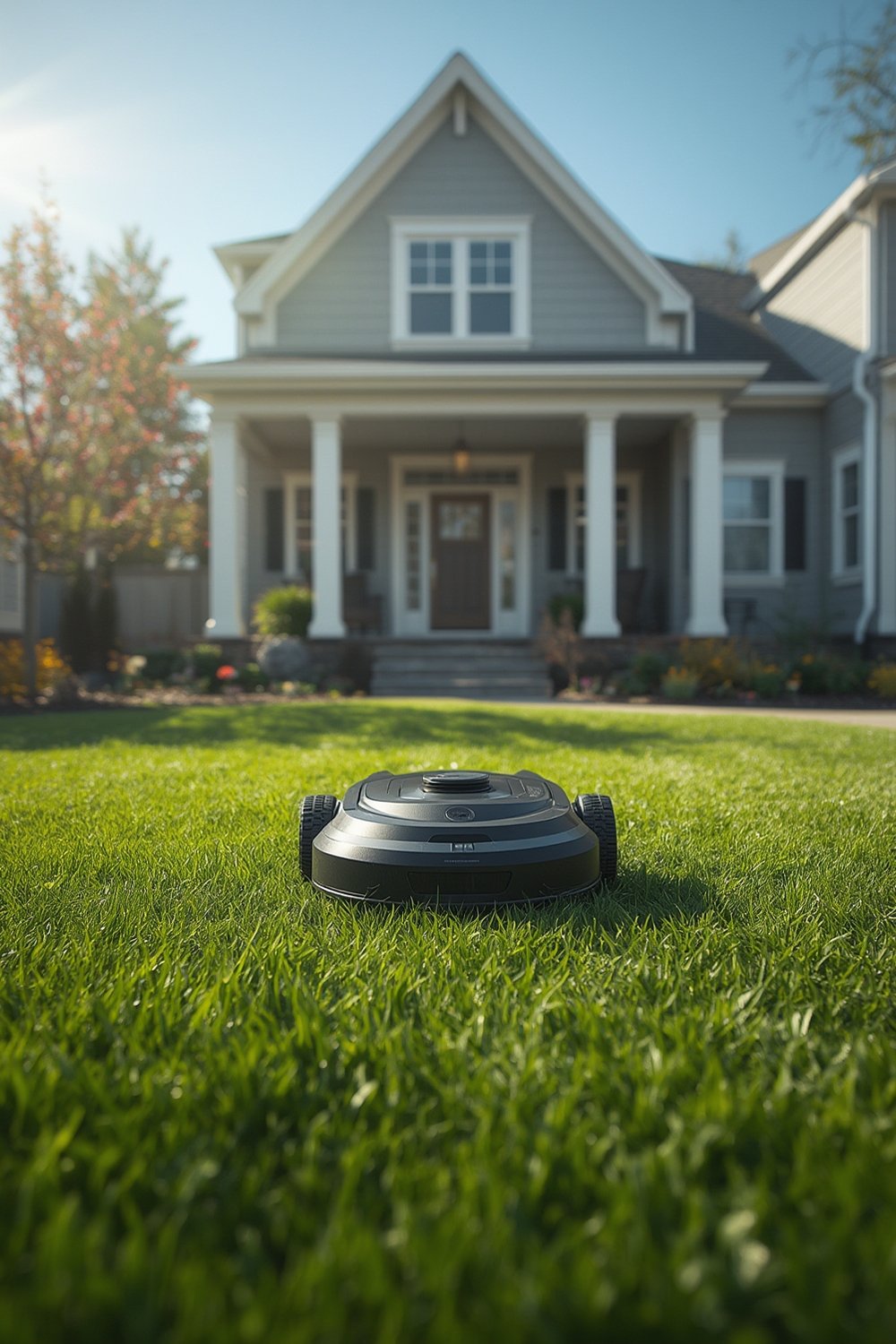
Buyers typically see themselves as tech-curious but want clear evidence of value and reliability before making the switch. For more on integrating modern tech into everyday home life, check our smart home devices guide.
What most homeowners get wrong
- Underestimating setup effort—boundary wires and mapping take more time than you think.
- Assuming every yard is compatible—complex layouts, narrow passages, or significant slopes create problems for many models.
- Overlooking long-term costs—parts, battery replacement, and service add up beyond the sticker price.
Quick Decision Guide
Who this is best for
- Owners of lawns up to about 0.5–1 acre with simple, open layouts
- People who want hands-off mowing and frequent grass cuts
- Tech-minded homeowners comfortable with installation/setup
- Those wanting a quieter, more eco-friendly alternative to gas mowers
- Anyone willing to invest up front for long-term time savings
Who should skip it
- Homes with steep slopes greater than 20–25 degrees
- Lawns full of complex flower beds or tight/narrow passages
- Buyers on a tight budget—expect a high upfront cost
- Anyone seeking truly “set-and-forget” performance without regular maintenance
- Owners worried about theft or lacking a secure yard
What to check before you buy
- Measure your lawn’s total area and map out obstacles
- Assess terrain: too many slopes, tree roots, or uneven ground?
- Research models with proven reliability and manufacturer support
- Investigate local noise, HOA, and city rules on automatic lawn mowing
- Budget for batteries, parts, and possible installation extras
- Confirm Wi-Fi/Bluetooth coverage if you want app-based control
- Check if the model works well with your specific grass type and growth rate
For tips on low-maintenance landscaping and easy lawn upgrades, see our backyard landscaping guide and our guide to beginner gardening.
Step by Step Buying Guide
- Measure and map your yard. Know the exact square footage and identify potential trouble spots: slopes, complex beds, obstacles.
- Research current robotic mower models. Compare run-time, cutting width, slope handling, connectivity, mapping features, and warranty terms.
- Get installation realistic. Assess if you can install the boundary wire or if you’ll need professional help. Plan at least a half to a full day for setup.
- Calculate all-in costs. Add base price, installation (DIY time or pro cost), accessories (extra wire, perimeter markers), expected battery replacement, and possible app subscriptions.
- Plan security. Check anti-theft features: PIN, GPS tracking, or base station locks, especially if your yard isn’t enclosed.
- Test Wi-Fi or app coverage. Spot-check signal at the charging base and yard edges if you want remote control or scheduling.
- Read user and expert reviews—if you can find them. Reliable owner data is scarce, so prioritize sources with long-term follow-up.
- Compare with your current costs and time spent mowing. Build a quick spreadsheet or use a ROI calculator to see your break-even year.
If you love saving time on other home chores, check our ventless washer dryer efficiency guide.
For comparison, you might also want to review the quietest electric mowers if noise is an issue in your neighborhood.
Options and Alternatives
Quick Picks
Best overall option for most homeowners.
Best value if price matters.
Best choice if you want premium features.
| Feature | Robot Lawn Mower | Manual Electric Mower | Pro Lawn Service |
|---|---|---|---|
| Upfront Cost | $800–$2,500 | $200–$400 | $40–$75/month |
| Annual Maintenance/Parts | $60–$200 | $30–$50 | Included |
| Hands-Off? | Mostly (requires setup & monitoring) | No—manual work every time | Yes |
| Noise | Very quiet | Quiet | Depends |
| Best For | Tech-savvy, convenience-focused | Budget buyers | No time for mowing |
| Lawn Health (Frequent Cut) | Excellent | Depends (if you mow often) | Good |
If you want pure savings, a simple electric mower is unbeatable on upfront cost. Want smart features or connectivity? Premium picks from leading brands offer smarter mapping, AI edge cutting, and better security at higher prices.
For more context on market momentum, the robot mower segment is projected to hit more than USD 5.8 billion globally by 2030, with the residential share around 65% and growing fast.
Advanced Analysis and Common Pitfalls
- Boundary confusion: Improper wire placement leads to missed spots or stuck mowers—always double-check your layout before finalizing.
- Performance on edges and slopes: No universal solution; some models struggle with tight edges or steep hills.
- Maintenance reality: Blades need replacing several times a season, batteries every 2–4 years—costs not always clear up front.
- Reliability and downtime: Scarce user review data makes it hard to predict; plan for occasional resets or troubleshooting, especially after storms or if pets/kids move wires.
- Theft risk: Smart models include PIN or GPS, but basic models may be tempting targets—lack of fencing increases risk.
- Hidden costs: Accessories, spare wires, charging station repairs, and software/app subscriptions may creep up over time.
Quick Pitfall Avoidance Checklist
- Walk your yard and note all tricky obstacles before buying
- Read real-world owner forums for model-specific issues
- Ask about battery and blade replacement schedules/costs
- Budget for annual maintenance and occasional wiring repairs
- Opt for models with robust anti-theft/return-to-base features
Few sources report on long-term reliability. Market growth is impressive (USD 3.2B in 2024, U.S. market doubling by 2027), but the lack of public complaint or support data warrants extra caution and hands-on research.

For more on maximizing your investment and minimizing hassle, see our DIY home improvement savings guide.
Conclusion
Robot mowers are genuinely transforming lawn care, but whether they’re the right answer depends on your yard, budget, and what you value most—time, automation, or simplicity. Technical and cost gaps remain, but momentum and residential demand are clear.
Verdict
Buy it if— You have a straightforward lawn under 1 acre, want frequent mowing, embrace tech, and can stomach an $800–$2,000+ upfront spend for convenience.
Skip it if— Your yard is complicated, steep, or you prefer the lowest cost, highest control, and don’t mind manual mowing or using a service.
On balance, a robot lawn mower worth it verdict is positive for homeowners with clear needs for hands-off maintenance, a compatible yard, and upfront budget for automation. For a side-by-side review, check our in-depth robot mower comparison guide.
FAQ
Are robot lawn mowers safe around pets and children?
Most current models include lift sensors and auto-stop features, making them safe to use around pets and kids. However, supervision is always recommended during operation.
How often do robot mowers need maintenance?
Blades usually require replacement every 1 to 2 months in high season, and batteries typically last 2 to 4 years. Occasional cleaning and wire checks reduce downtime.
Can robot mowers handle tall or wet grass?
They work best when the grass is cut regularly; tall or wet grass may require a preliminary manual cut to avoid clogs or missed spots.
What is the usual installation time for a robot mower?
DIY installation usually takes several hours to a full day, depending on boundary complexity. Professional install can speed up the process but costs extra.
Are there any hidden costs with robot mowers?
Yes. Accessories, replacement blades, batteries, perimeter wire repairs, and possible app fees can add to long-term costs.